
Compete for a reduced acoustic space: Impact of anthropogenic noise and interspecific competition on Blue tit and Great tit songs
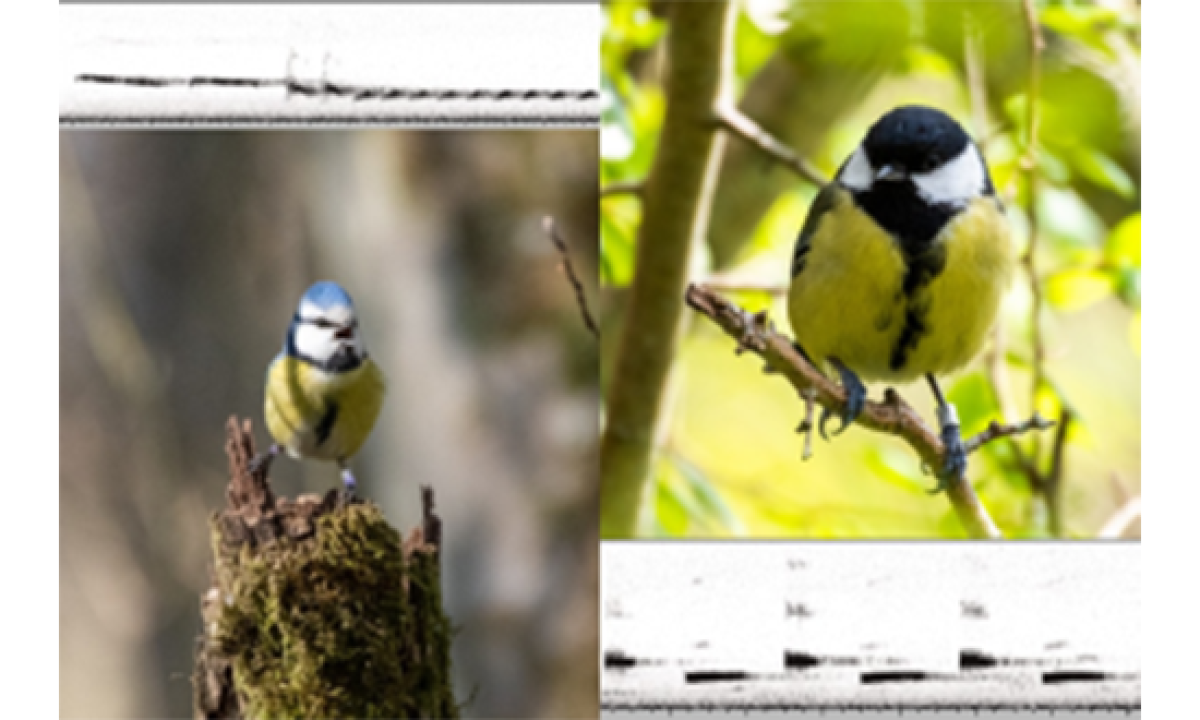
The impact of urban noise and interspecies interaction on the blue tit and the great tit.
Rising levels of anthropogenic noise on low frequencies disturb acoustic communication and organisms have to adjust their signalling behaviour. By reducing the acoustic space available, acoustic pollution may modify interspecific competition.
The present data were used to explore song temporal and spectral characteristics of two ecologically close bird species, blue tit (Cyanistes caeruleus) and great tit (Parus major), along combined gradients of anthropogenic noise (measured in dB) and relative abundance, a proxy of interspecific competition, measured using point count values.
Data were collected between 2022 and 2024, during the reproductive season, in Besançon, Dijon and Lyon and nearby forests. We found that great tit songs present significant higher maximum frequency in noisy areas and lower minimum frequency under high blue tit abundance context. Blue tit song minimum frequency changed with great tit abundance, the direction of the change depending on conspecific abundance.
Although no synergetic effect of acoustic pollution and competition was detected, the increase in great tit song frequency induced a more important overlap with blue tit acoustic niche, which is likely to enhance competition between these species.
This study highlights the importance of considering the impact of human activities on mechanisms underlying coexistence between species.