
Mechanical Properties of Lunar Soil: Raw Dataset for the Lunar Regolith Database
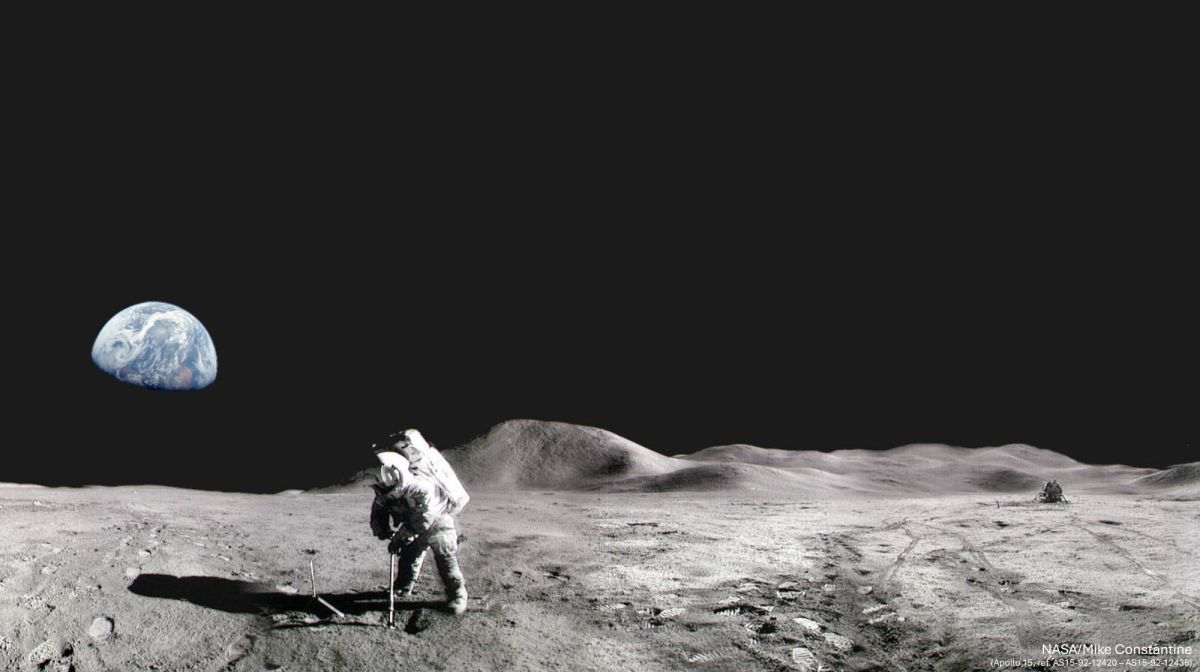
As we return to the Moon, understanding the mechanical properties of lunar regolith is a major challenge for space exploration.
Understanding and accurately predicting the behavior of granular materials remains a critical challenge for space exploration. The surface of many rocky extraterrestrial bodies, such as the Moon, Mars, and asteroids, is covered by regolith - a fine rock-based powder whose mechanical properties are still not fully defined. Understanding this complex material is of major importance as it directly impacts the success of numerous exploration operations from surface landings to in-situ resource utilization.
Despite their importance, geotechnical data available on regolith in low-gravity environments are remarkably rare. The vast majority of our current knowledge comes from international space programs conducted in the 1960s - 1980s. While these historical datasets remain indispensable for the preparation of upcoming lunar missions, they are currently difficult to access and reuse. Acquired at great human and financial cost, these unique resources are often dispersed, restricted by their format, and buried deep within hundreds of pages of original, scanned historical reports. This severe under-exploitation of existing data poses a risk of design errors for future planetary missions.
To facilitate access and allow for easy reutilization of these invaluable datasets, we developed the Lunar Regolith Database. This initiative standardizes and centralizes both historical data and findings from more recent missions into a single, open-access framework. The present dataset contains the raw .CSV files with all the data displayed in our interactive web application. It includes over 6,000 entries detailing the mechanical properties of both true lunar regolith and common lunar simulants.
To learn more about the database, see the data paper : L. Gasteiner, N. Murdoch, and O. D’Angelo. “An Open Database of Lunar Regolith and Simulants Properties”. arXiv preprint, 2026.