
They have deposited their data on Recherche Data Gouv repository!
On 1 December, the fourth edition of the Open Science Awards was held at ENS Saclay during the French ‘Assises nationales des données de la recherche’ (ANDOR 2025), organised by the French Ministry of Higher Education, Research and Space : Research Data Award, Free Research Software Award and Thesis Award.
Among the winners, Saray Chavez won an award for her thesis 'Quand les PLU(i) régulent la pluie : évaluation du potentiel des Plans Locaux d'Urbanisme pour intégrer la gestion des eaux pluviales à la source : le cas de Nantes Métropole' whose main dataset is stored in the Recherche Data Gouv repository. Three questions to Saray :
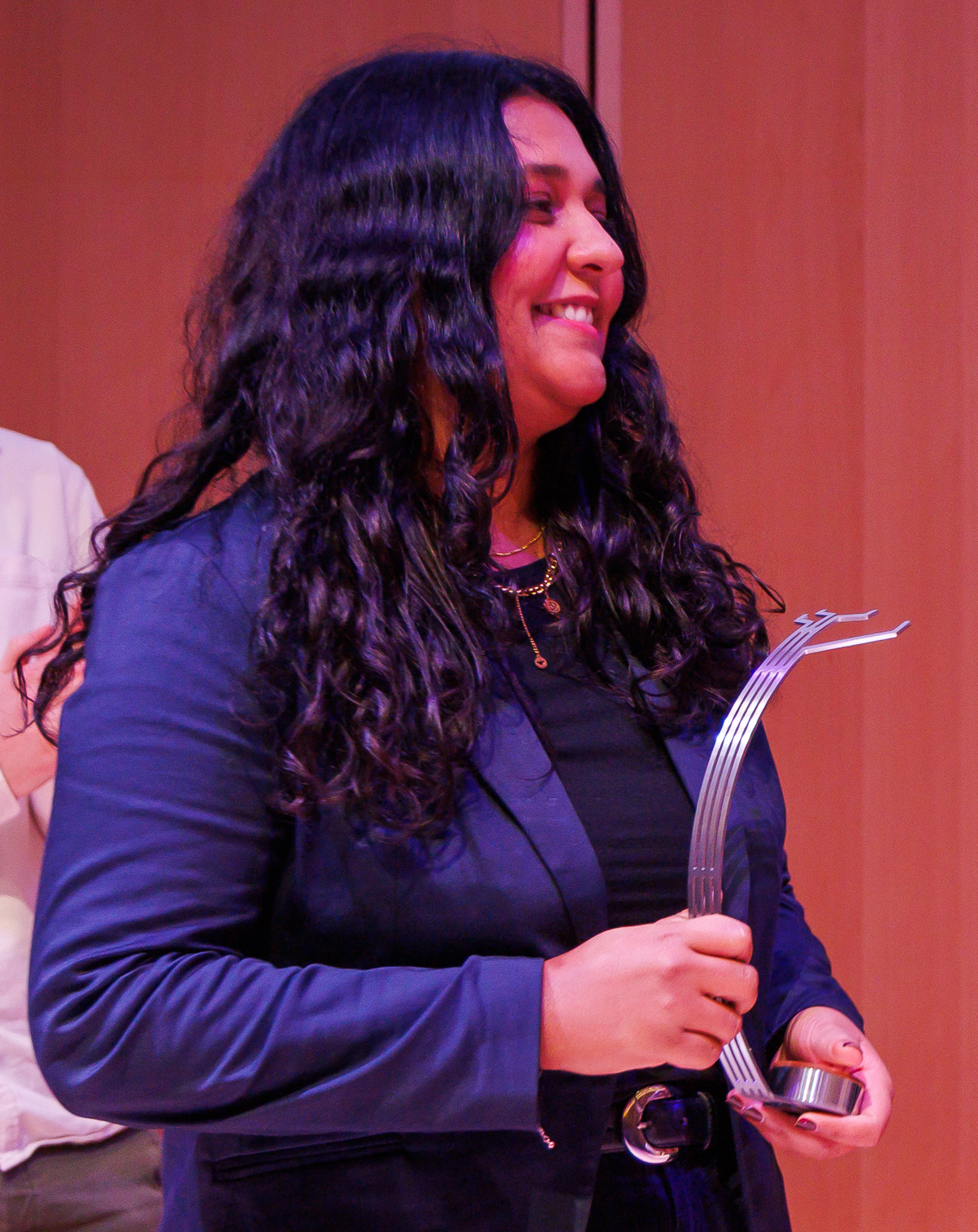
© Christophe PEUS | Université-Paris-Saclay
What is your field of research and what type(s) of data do you work with?
I am working on assessing the effects of urban planning rules on the integration of nature-based solutions to manage rainwater in cities. My work involves regulatory data from the Nantes Métropole Local Urban Planning Plan (the PLUm), spatial and hydrological data processed under GIS (Geographic Information System) and qualitative data from interviews and analyses of building permits.
How did you get to know the Recherche Data Gouv repository and why did you deposit data there?
I got to know Recherche Data Gouv as part of the open science courses I took during my PhD. I deposited my data there in order to ensure their accessibility, traceability and re-use, in a logic of methodological transparency. The manuscript of my thesis accompanies the use of the data deposited on the portal, which allows, in fine, to reproduce my results or to adapt the approach to other territories.
What does this Open Science Thesis Award mean to you?
This award is a strong recognition of the commitment to open science throughout the thesis. It values work that aims to generate knowledge that is useful to communities and public policy, while making data and methods accessible to as many people as possible.
Other datasets associated with winning projects:
- Cartes du projet RIVAGES Normands 2100
> Research data Award, category ‘Mention spéciale du jury’
- RPG Explorer - Données sur l'utilisation de sols agricoles issues de la PAC (Politique Agricole Commune)
> Research data Award, category ‘Créer les conditions de la réutilisation’
- Jeux de données associés à la thèse Bypass frauds in cellular networks : Understanding and Mitigation , de Anne Josiane Kouam
> Thesis Award, catégory « Sciences et technologies »
Placing your research data in a trustworthy repository, disciplinary or institutional, is a strong recommendation of open science, and one of the determining criteria for juries!